Marketing
How to Lower Customer Acquisition Cost: A Practical Guide
Learn how to calculate customer acquisition cost correctly, diagnose what is driving it up, and reduce CAC without blindly cutting growth.
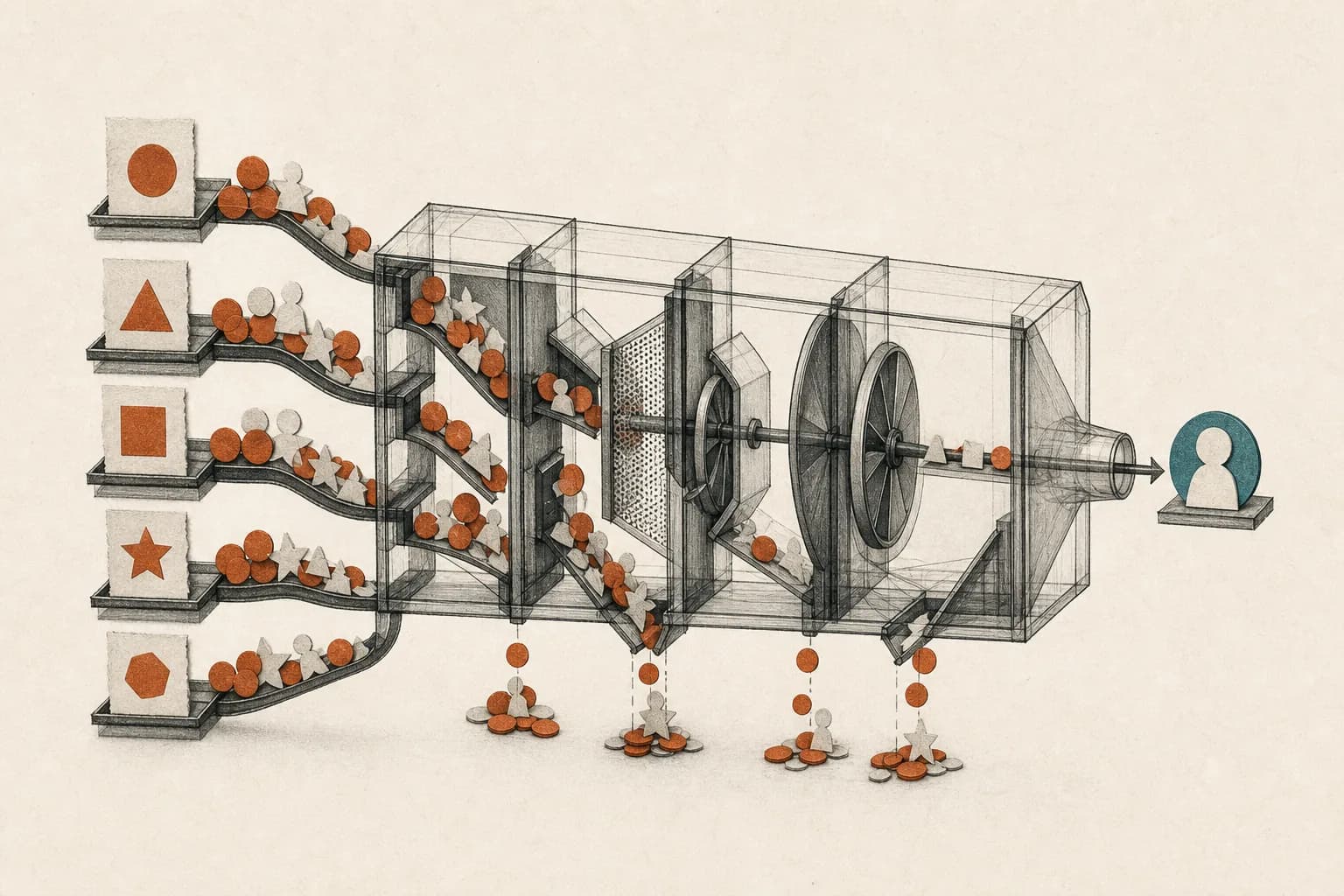
To lower customer acquisition cost, first confirm that you are counting new customers and acquisition costs correctly. Then diagnose which stage changed: traffic cost, visitor conversion, sales close rate, or customer value. Cutting every channel at once may make CAC look better by stopping growth; fixing the broken stage improves the economics.
This guide gives you the formulas, a worked example, and a weekly worksheet you can use without buying another analytics platform.
Customer acquisition cost formula
Customer acquisition cost, or CAC, is the acquisition expense required to win one new paying customer during a defined period.
CAC = acquisition costs ÷ new customers acquired
If you spend $12,000 on acquisition in June and acquire 80 new customers, June CAC is $150.
The formula is simple. The definitions are where teams get into trouble.
Decide which costs belong in CAC
For a useful management number, include the costs required to run acquisition:
- advertising and sponsorship spend;
- sales and marketing software used for acquisition;
- agency, contractor, and creative production costs;
- compensation allocated to acquisition work; and
- commissions or other direct acquisition incentives.
Do not quietly exclude labor from one channel while including an agency fee in another. Document the rule and apply it consistently.
If you need a fast weekly signal, you can calculate a media-only CAC using ad spend. Label it clearly. Do not compare it with a fully loaded CAC and pretend they measure the same thing.
Count customers, not leads
A form fill is a lead. A booked call is an opportunity. A first purchase or activated paying account is a customer.
If $10,000 produces 500 leads and 25 customers:
- cost per lead is
$10,000 ÷ 500 = $20; - CAC is
$10,000 ÷ 25 = $400.
Both numbers help, but they answer different questions. Confusing them can make an unprofitable campaign look healthy.
CAC is not CPC, CPL, CPA, or ROAS
Use each metric for the stage it actually measures.
| Metric | Formula | Best use |
|---|---|---|
| CPC | spend ÷ clicks | Diagnose the cost of traffic |
| CPL | spend ÷ leads | Diagnose traffic-to-lead efficiency |
| CPA | spend ÷ configured actions | Diagnose a named conversion action |
| CAC | acquisition costs ÷ new customers | Measure the cost of customer growth |
| ROAS | attributed revenue ÷ ad spend | Compare advertising revenue with media spend |
Cost per action is only as meaningful as the action you configured. If a platform counts newsletter sign-ups, calls longer than 30 seconds, and purchases in the same “Conversions” column, its CPA is not your CAC.
Use blended CAC and channel CAC for different decisions
Blended CAC divides all acquisition costs by all new customers. It tells you whether the overall growth system is economically sustainable.
Channel CAC divides the cost assigned to one channel by customers attributed to that channel. It helps decide where to investigate or invest.
Channel CAC is not perfectly objective. A customer might discover you through search, return through email, and buy after a salesperson's call. The channel receiving credit depends on the attribution rule.
Choose one rule for recurring decisions, such as first touch, last non-direct touch, or a documented multi-touch model. Keep a separate “direct or unattributed” group instead of forcing every customer into a convenient channel.
For paid search, confirm that your conversion setup can distinguish new customers from returning ones. Google documents a new-customer acquisition parameter for advertisers using that goal, but tagging still has to match your business's definition of “new.”
Set a CAC ceiling before you optimize
“Lower” is not a complete target. A $300 CAC may be excellent for a high-margin recurring service and disastrous for a $120 one-time purchase.
A cautious starting ceiling is the contribution you expect the customer to produce during the period you are willing to wait for payback.
CAC ceiling = expected contribution margin during payback window
Suppose:
- average initial sale: $600;
- gross margin after variable delivery costs: 55%;
- expected contribution from the initial sale:
$600 × 55% = $330; - acceptable payback window: the initial sale.
A CAC above $330 loses money before fixed operating costs. A $250 CAC leaves $80 of initial contribution. Whether that is enough depends on overhead, cash flow, refunds, and the reliability of the assumptions.
For a subscription, use observed retention—not the lifetime you hope for. A six-month payback window is only useful if the business can fund six months of acquisition and customers reliably remain long enough.
Diagnose rising CAC in the right order
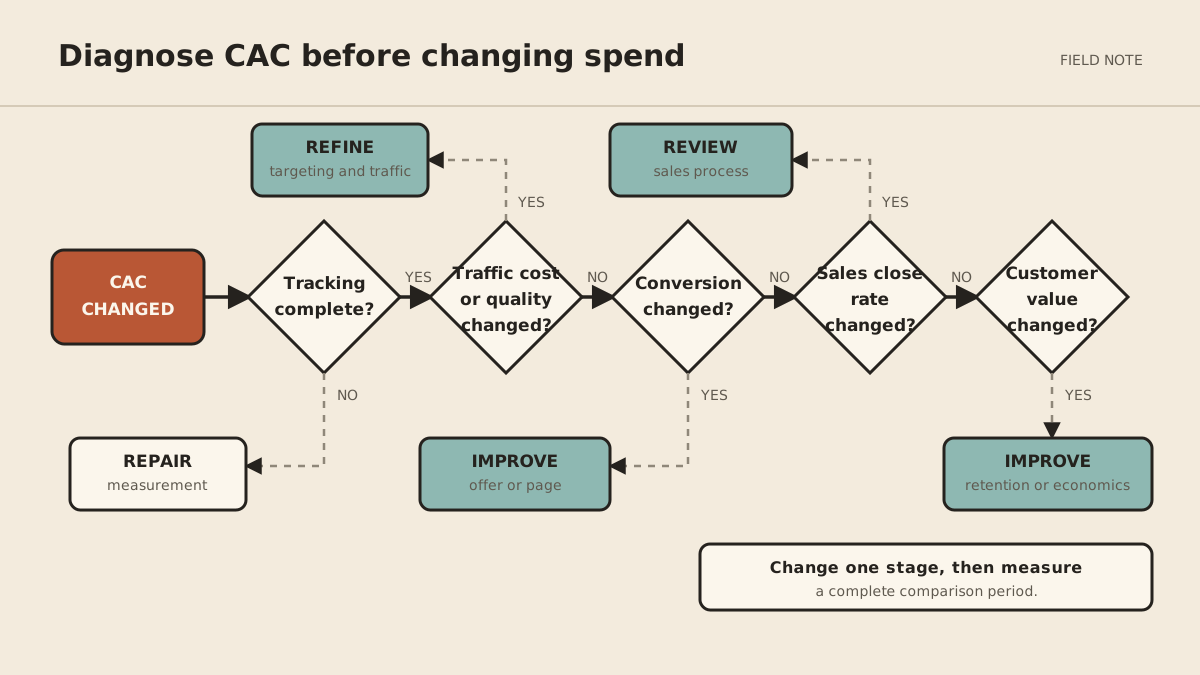
Do not start by changing bids. Start with measurement, then move through the funnel.
1. Confirm the measurement
For the same date range, reconcile:
- platform spend with invoices or billing exports;
- new-customer events with your payment system or CRM;
- duplicate, test, refunded, or returning-customer records;
- reporting time zones; and
- attribution and conversion-window changes.
If your CAC jumped because the CRM stopped recording the source for phone sales, campaign optimization will not fix it.
2. Check traffic cost and quality
If cost per click or impression rose, determine whether the change is broad or concentrated by campaign, keyword, audience, geography, or device.
In Google Ads, Quality Score can help diagnose expected clickthrough rate, ad relevance, and landing-page experience. Google explicitly describes the 1–10 score as a diagnostic tool rather than an auction input or KPI. Use the component ratings to find a weak user experience; do not chase a score because a third party promised a universal discount.
For search campaigns, review the actual queries that triggered ads. Google's search terms report can reveal expensive irrelevant demand. Add negative keywords carefully: Google warns that negative matching behaves differently from positive matching and can block useful traffic if applied too broadly. The official negative-keyword guidance explains the campaign and match-type controls.
3. Check visitor-to-lead or visitor-to-purchase conversion
If traffic cost is stable but CAC rose, compare conversion rates by the same segments.
Inspect:
- whether the page matches the promise in the ad or link;
- page speed and mobile usability;
- price, availability, and offer changes;
- form or checkout errors;
- the number of required steps; and
- traffic landing on a general page when a specific page exists.
Do not redesign the entire site from one bad week. Identify the high-volume page or step where the drop occurred, state one hypothesis, and run a comparison long enough to observe real customers.
4. Check lead-to-customer close rate
A healthy cost per lead can hide a sales problem.
Compare:
- speed to first response;
- qualification criteria;
- show rate;
- proposal rate;
- time between follow-ups;
- lost-reason notes; and
- performance by source.
If low-intent leads increased, the acquisition promise may be too broad. If qualified leads are waiting three days for a response, fix routing and ownership before buying more.
5. Check retention and customer value
Strictly speaking, lower retention does not change the acquisition cost you already paid. It changes how much CAC the business can afford.
Measure early refunds, cancellations, repeat purchase, gross margin, and expansion by acquisition cohort. A channel with a $120 CAC and weak retention may be worse than one with a $180 CAC whose customers stay and contribute more.
6. Check channel mix
Blended CAC can rise even when every channel performs normally if the mix shifts toward a more expensive channel.
Separate:
- scalable paid demand;
- partner or referral demand;
- organic search and content;
- outbound sales;
- events or communities; and
- existing-customer referrals.
Cheap channels are not automatically scalable. Expensive channels are not automatically wasteful. Judge the next dollar and the customer value it produces.
A worked CAC diagnosis
Imagine a local service business comparing two four-week periods.
| Measure | Previous | Current |
|---|---|---|
| Paid acquisition spend | $8,000 | $8,800 |
| Clicks | 4,000 | 4,000 |
| Leads | 240 | 220 |
| New customers | 48 | 33 |
| CPC | $2.00 | $2.20 |
| Lead conversion rate | 6.0% | 5.5% |
| Lead close rate | 20.0% | 15.0% |
| Media-only CAC | $166.67 | $266.67 |
CAC increased by $100. CPC explains part of it, but not most of it. With 220 leads, the old 20% close rate would have produced 44 customers and a $200 media-only CAC. The largest break is lead-to-customer conversion.
The next investigation is not “cut paid search.” It is:
- verify that customer events are complete;
- compare lead quality and source mix;
- inspect response time, show rate, and lost reasons; and
- restore or improve closing before increasing spend.
These figures are illustrative. Replace them with your own baseline.
A 15-minute weekly CAC worksheet
Use the same cutoff and attribution rule every week.
| Channel | Acquisition cost | New customers | CAC | Four-week CAC | What changed? |
|---|---|---|---|---|---|
| Paid search | |||||
| Paid social | |||||
| Partners/referrals | |||||
| Outbound | |||||
| Organic/direct | |||||
| Blended |
Add one investigation note, not five reactive changes. Examples:
- three high-spend irrelevant search terms appeared;
- mobile form completion fell after the latest release;
- response time exceeded one business day;
- one partner campaign produced fewer but better-retaining customers; or
- attribution changed and the current week is not comparable.
Weekly data can be noisy for a low-volume business. Use it to notice and investigate, not to overrule a longer, reliable comparison period.
What to automate—and what not to
Collecting exports, joining campaign names, calculating the same formulas, and flagging changes are repeatable tasks. They can be handled by a spreadsheet, scheduled reporting tool, conventional automation, analyst, or agent.
Keep consequential decisions separate. A monitoring workflow can:
- retrieve approved reports;
- calculate channel and blended CAC;
- compare them with the four-week baseline;
- link to the source rows; and
- prepare an exception note.
It should not raise budgets, pause campaigns, or change targeting without an explicit approval boundary. A wrong report should create a question, not spend money.
The same design principles in the small-business automation guide apply: begin with one measurable job, connect the minimum data, and keep reversible analysis separate from consequential action.
Customer acquisition cost FAQ
What is a good CAC for a small business?
There is no universal dollar amount. A good CAC fits inside observed contribution margin, cash-flow capacity, and an acceptable payback window. Compare the number with your own economics and cohorts, not an industry average built from unlike businesses.
How often should I calculate CAC?
Calculate it monthly for financial decisions and as often as weekly for operational monitoring if you acquire enough customers for the weekly number to be meaningful. Use the same cost, customer, date, and attribution definitions each time.
Can CAC be negative?
Not under the normal formula. Referral credits or immediate gross profit may offset acquisition spending economically, but report those components separately rather than creating a confusing negative CAC.
Should employee salaries be included in CAC?
Include the portion of sales and marketing compensation used to acquire new customers when calculating fully loaded CAC. A media-only version can exclude salaries for faster campaign monitoring, but label it and do not compare it directly with fully loaded CAC.
Does better retention lower CAC?
Retention does not change the historical cost of acquiring a customer. It increases the value and contribution available to repay that cost, which can make the same CAC more sustainable.
Lower CAC without losing the customers you want
Use this order:
- repair measurement;
- find the stage that changed;
- make one targeted improvement;
- measure it over a fair comparison period; and
- keep acquisition cost inside observed customer economics.
That process is slower than cutting a budget in panic and much more likely to produce durable growth.
MyAgnts can monitor a defined reporting workflow and bring exceptions to you for review. The value is not an automatic bidding promise; it is getting the same evidence on schedule without handing budget authority to the system.