Comparisons
AI vs. Human Virtual Assistant: Cost, Capabilities, and the Hybrid Model
Compare an AI virtual assistant with a human virtual assistant by task fit, cost, judgment, review, and responsibility.
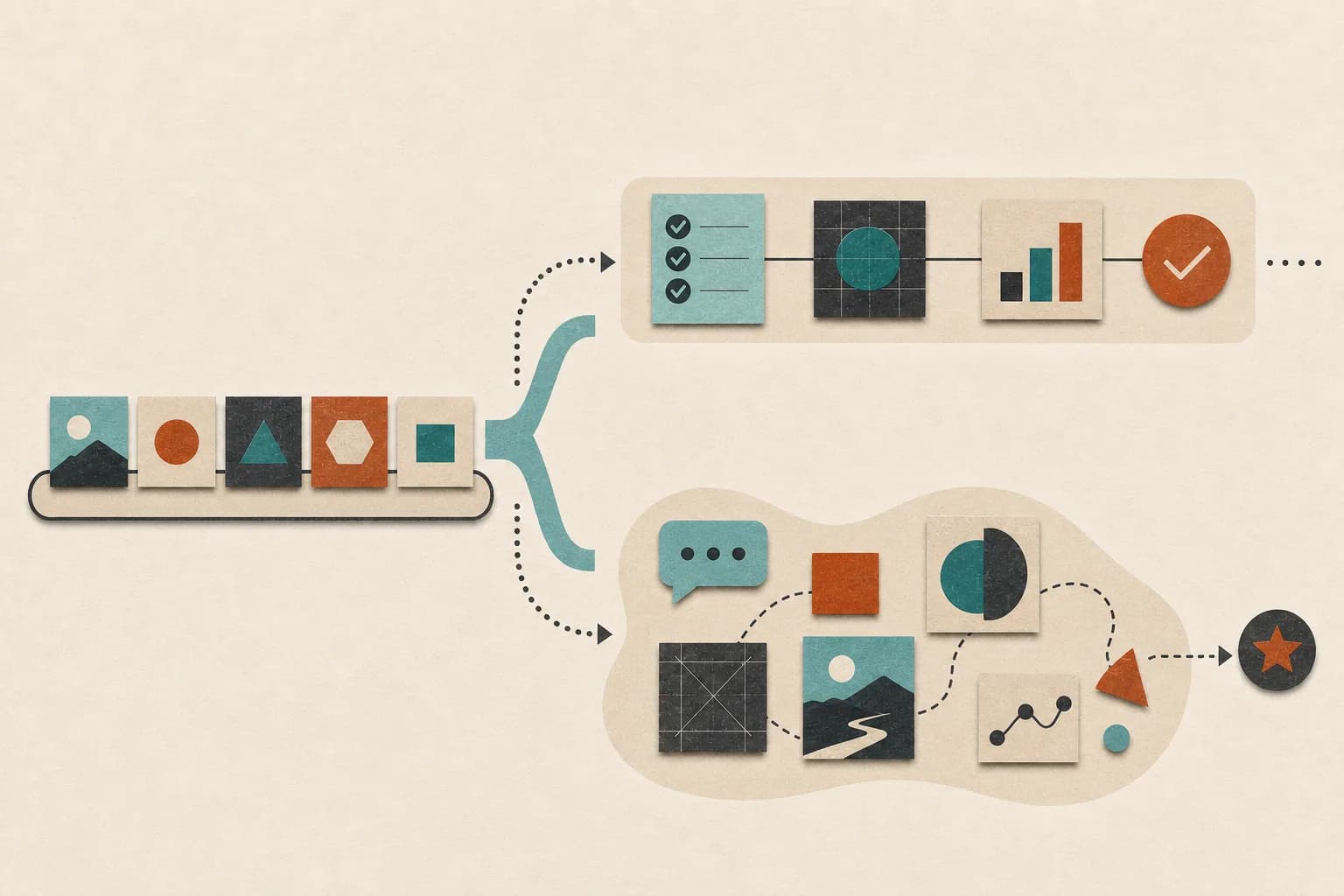
An AI virtual assistant is usually better at high-volume, repeatable digital work. A human virtual assistant is better at ambiguity, relationships, accountability, and novel judgment. For many small businesses, the practical answer is a hybrid: AI gathers, checks, and prepares; a person verifies, resolves ambiguity, communicates in sensitive situations, and owns exceptions.
The cost comparison needs the same care. Software subscriptions, managed AI services, freelance hours, agency retainers, and employee compensation buy different responsibilities.
Public price and wage references were checked against the linked sources; recheck current figures before making a staffing decision.
AI virtual assistant vs. human virtual assistant: the quick decision
| Task attribute | Start with AI | Start with a human | Hybrid default |
|---|---|---|---|
| Repeatability | Stable steps and recurring inputs | Changing or novel work | AI handles the repeatable first pass |
| Reviewability | Output is easy to check before impact | Errors require context to spot | AI prepares with source links; person verifies |
| Relationship weight | Low-contact internal preparation | Trust, tone, negotiation, or subtext | AI drafts; person decides and sends |
| Consequence | Reversible, low-risk work | Public, financial, sensitive, or hard-to-undo work | AI pauses with a person before the consequential step |
| Exception ownership | Clear rules and an escalation path | Someone must chase and resolve ambiguity | Person owns the exception queue |
Neither option is universally better. Choose the operating model that matches the work, access, and review time you can actually provide.
The practical difference
An AI assistant is software. It can read connected sources, interpret language, prepare outputs, and sometimes take approved actions. It can run on schedules and repeat a defined process, but it does not carry human responsibility or understand a relationship the way a person does.
A human virtual assistant is a person working remotely. They can learn unwritten preferences, notice social context, handle a new situation, coordinate with other people, and take responsibility for seeing a messy assignment through. They have working hours, capacity limits, and the ordinary needs of a human teammate.
Cost: compare like with like
| Option | Visible cost | Responsibility that may remain with you |
|---|---|---|
| Self-serve AI | Subscription, usage, or seats | Setup, connections, tests, maintenance, review, and exceptions |
| Managed AI | Service fee plus any excluded tools | Workflow goals, minimum access, customer review, and consequential decisions |
| Freelance VA | Hourly rate, package, or agency fee | Briefing, coordination, management, and coverage planning |
| Employee | Wage or salary | Benefits, payroll taxes, equipment, management, and employment obligations |
Self-serve AI products commonly start around $20–$100 per month, though usage, minimum seats, and companion tools can increase the total. A no-code agent platform may be free for experiments or cost from tens to several hundred dollars per month at team capacity. Those figures are directional, not quotes.
Managed AI includes implementation and operations. MyAgnts, which publishes this comparison, currently lists Private Operator at $500/month. Its published offer includes personal setup, AI usage with no separate model account, approved connections, persistent memory on encrypted storage, monthly workflow review and tuning, and priority support. The customer still owns the workflow goal, access decisions, corrections, exceptions, and consequential review. See the current pricing and managed service pages.
For freelance and employee comparisons, use the linked Upwork virtual assistant cost guide and BLS wage data as reference points, not promises or global standards. Benefits, taxes, onboarding, minimum hours, agency markup, and local labor conditions can change the total.
Use the full AI agent cost formula before treating a subscription or service fee as the whole cost.
Capability comparison
| Question | AI virtual assistant | Human virtual assistant |
|---|---|---|
| Availability | Can run on schedules and events at any hour | Works agreed hours; time zones can extend coverage |
| Repetition | Consistent on well-defined digital tasks | Accurate but limited by capacity and attention |
| Speed | Can process many items quickly | Works sequentially, with context and judgment |
| Ambiguity | Needs rules, sources, and escalation | Can ask nuanced questions and infer context |
| Relationships | Can draft in a chosen style | Understands trust, history, timing, and subtext |
| Accountability | Can leave logs but cannot hold human responsibility | Can own an outcome and explain judgment |
| Tool access | Requires technical connections and permissions | Can use tools through ordinary interfaces and training |
| Learning | Can retain configured context; changes need review | Learns through interaction, observation, and feedback |
| Failure mode | May be confidently wrong or follow malicious input | May misunderstand, forget, or make ordinary human errors |
| Scaling | More volume may add usage cost but little elapsed time | More volume requires more hours or people |
Tasks AI usually handles well
Use AI where the rules and sources are clear and the output is easy to check:
- sorting and summarizing a defined inbox;
- preparing meeting packets from named sources;
- extracting specified fields from routine documents;
- monitoring selected pages or records for changes;
- drafting standard follow-ups;
- converting meeting notes into proposed tasks;
- assembling weekly reports; and
- checking forms for missing information.
The assistant should link back to source material and flag missing or conflicting facts.
Tasks a human assistant usually handles better
Use a person where context, trust, and adaptive judgment dominate:
- communicating with an upset customer;
- negotiating schedules among senior or external participants;
- protecting the owner’s attention when priorities conflict;
- managing a novel project with incomplete instructions;
- coordinating sensitive personnel matters;
- noticing that a technically valid action is socially unwise;
- calling a vendor and working through an exception; and
- taking accountable ownership when the process breaks.
AI can prepare facts or a draft for these jobs. It should not disguise that a human decision is still required.
The hybrid recommendation
A useful hybrid is not “AI everywhere, human approval nowhere.” It is a clear handoff:
- AI gathers approved source material and identifies missing fields.
- AI checks routine conditions, duplicates, and defined inconsistencies.
- AI prepares a summary, proposed tasks, or first draft with source links.
- A person verifies important facts and resolves ambiguity.
- A person sends or commits sensitive, public, financial, or consequential actions.
- A person reviews exceptions and updates the process when the business rule changes.
For example, in client onboarding, AI can check a form, organize documents, flag missing items, prepare a welcome draft, and create proposed tasks. A human assistant can resolve unusual requests, coordinate stakeholders, and make sure the client’s first experience feels considered rather than processed.
The AI expands the person’s capacity; the person supplies judgment and continuity.
Which option fits your business?
Choose an AI assistant first when
- the task is digital, frequent, and structured;
- coverage outside working hours matters;
- the output is quick for you to verify;
- access can be narrowly scoped; and
- someone will own testing and maintenance.
Choose a human virtual assistant first when
- the role is broad or still changing;
- most work arrives through people and exceptions;
- relationship judgment is central;
- you need someone to chase unclear ownership; or
- the assistant must take responsibility for coordinating an outcome.
Use both when
- a capable person spends much of the day gathering and formatting information;
- response preparation is repetitive but final communication needs judgment;
- the business needs after-hours monitoring with daytime human resolution; or
- the owner wants delegation but also needs a person to supervise the workflow.
A task-allocation exercise
For one week, list every assistant-shaped task and mark four attributes:
- Repeatability: does it follow a stable pattern?
- Reviewability: can an error be spotted before impact?
- Relationship weight: does trust or subtext change the correct response?
- Consequence: is the action public, financial, sensitive, or hard to undo?
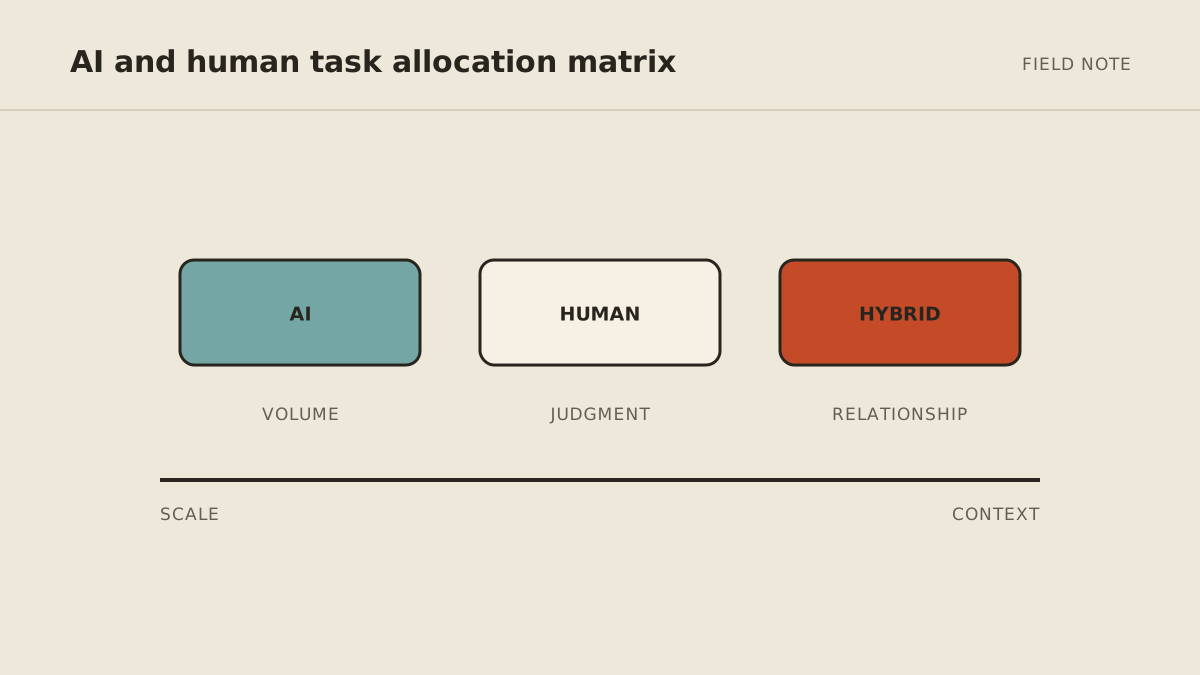
Give high-repeatability, high-reviewability, low-relationship, low-consequence preparation to AI. Give low-repeatability, high-relationship, high-consequence work to a person. Split the middle: AI drafts, a person decides.
Then price the resulting roles, not the title “assistant.” Include setup, connections, maintenance, review, and exception handling. A small AI workflow plus skilled human coordination may fit better than either forty hours of routine manual work or an overconnected AI that still needs constant checking.
MyAgnts is a managed AI option, not a staffing agency. It may fit when a defined recurring workflow should run in a private operator and the customer does not want to maintain the system. If you are deciding how to divide a real assistant role, book a setup call. No task prep is required; we will learn how the role works and identify which parts look agent-shaped and which should stay with a person. It should not assume AI replaces a human VA.