Productivity
How to Delegate Tasks as a Solo Founder (No Hiring Yet)
Learn how to delegate tasks as a solo founder: what to hand off first, how to write a clear brief, and how to stay in control.

When you work alone, every task eventually finds its way back to you. Customer emails, calendar changes, research, invoices, follow-ups, and website updates all compete with the work that only you can do.
Learning how to delegate tasks as a solo founder does not mean making a full-time hire. You can hand off a small, repeatable job to a freelancer, virtual assistant, software tool, or managed AI agent. The important part is choosing the right work and explaining what a good result looks like.
Start with a one-week task audit
For one normal week, keep a simple list of what you do. Do not build a complicated tracking system. Write down the task and a rough time estimate.
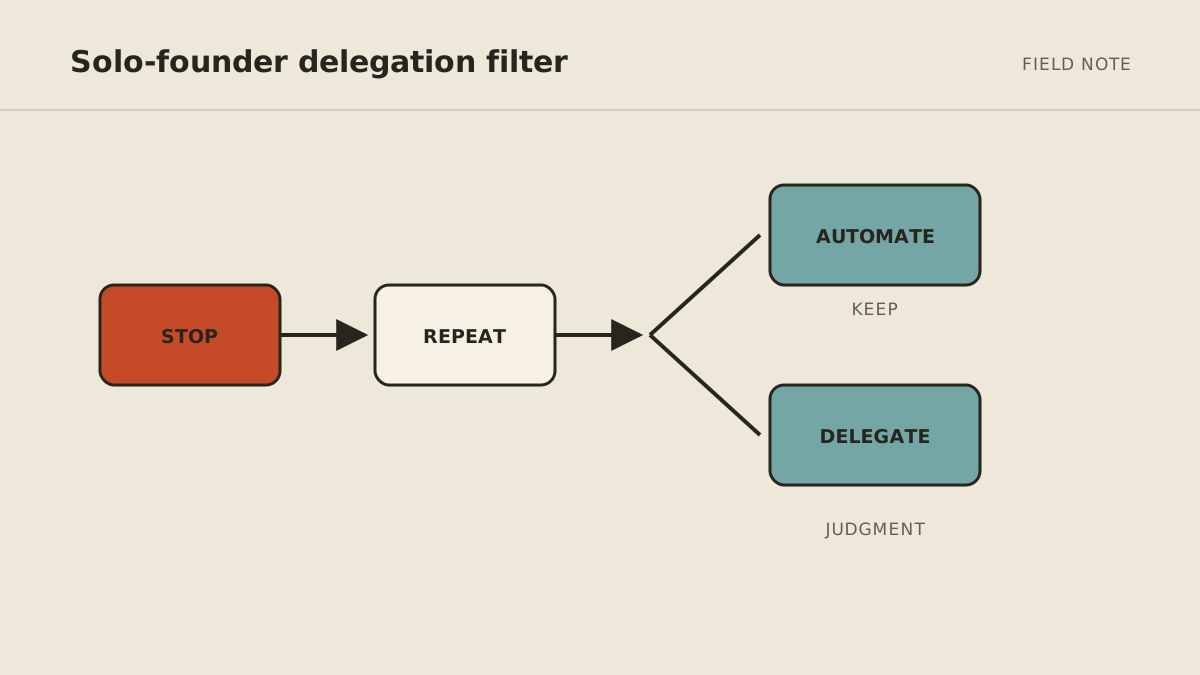
At the end of the week, mark each task with one of these labels:
- Keep: work that needs your judgment, relationships, or final decision
- Simplify: work that is necessary but more complicated than it needs to be
- Automate: predictable work with clear rules
- Delegate: repeatable work another person or service can own
- Stop: work that no longer produces a useful result
This prevents a common mistake: delegating a messy process that should have been removed first.
What to delegate first as a solo founder
The best first task is frequent, easy to check, and low risk when something goes wrong.
Good examples include:
- Sorting routine inbox messages and flagging the few that need you
- Scheduling calls and protecting focus time
- Preparing a weekly report from known data sources
- Researching options against a clear list of requirements
- Updating contact details, prices, or hours across your website and profiles
- Drafting routine follow-ups for your approval
- Organizing receipts, files, or notes in a consistent place
Keep product direction, sensitive employee or customer issues, major spending, legal decisions, and important sales conversations with a human owner.
A useful test is: Can I explain the result, the boundaries, and the exceptions on one page? If not, narrow the task before you hand it off.
Choose the right kind of help
Different helpers are good at different work.
Use software automation for fixed rules
Software is a strong fit when the trigger and result rarely change. For example, save every form response to a spreadsheet and send a confirmation email.
Use a freelancer for a defined project
A freelancer works well for a task with a clear finish line, such as designing a sales deck, cleaning up bookkeeping, or writing a set of customer emails.
Use a virtual assistant for flexible human support
A virtual assistant can handle context, exceptions, and communication that need human judgment. They also need onboarding, feedback, and ongoing management.
Use a managed AI agent for repeatable digital work
A managed agent can help with recurring work across messages, calendars, websites, files, and connected tools. It is most useful when the rules are clear and approval boundaries are explicit.
These options can work together. You might use software for a fixed trigger, an agent for daily triage, and a specialist freelancer for a project that needs expertise.
How to delegate without hiring: a four-step handoff
1. Describe the outcome
Avoid broad instructions such as "handle my inbox." Define the result instead:
By 9 a.m. each weekday, group new messages into urgent, needs a reply, and no action. Draft replies for routine scheduling questions. Never send a message or delete anything without approval.
Now the task is measurable.
2. Give examples
Share two or three examples of good work and one example of what to avoid. Examples reveal your preferences faster than a long explanation.
3. Set boundaries
State what can happen automatically, what needs your approval, and what must never happen. Be especially careful with money, public messages, private information, account access, and promises made to customers.
4. Review a small batch
Start with a few real cases. Review the result, correct the instructions, and repeat. Expand the task only after the simple version works reliably.
Stay in control without taking the task back
Delegation fails when the founder checks every step or disappears completely. Use a short review rhythm instead.
For recurring work, review a small set of measures once a week:
- What was completed?
- What needed approval?
- What went wrong or took too long?
- Which instruction needs to change?
- Is this task still worth doing?
If you keep fixing the same issue, improve the process. If every case is different and needs your judgment, the task may not be ready to delegate.
Know when it is time to hire
Tools, freelancers, and managed services can create room to grow, but they do not replace every role. A hire may make sense when the work is steady, central to the business, and needs judgment that is hard to document.
Other signs include:
- Customers need a consistent human relationship
- The role influences strategy or product decisions
- You have enough work and revenue to support the position
- Coordinating several outside helpers takes more time than managing one owner
Delegation before hiring is not a shortcut around building a team. It helps you learn which work deserves a permanent owner.
FAQ
How can a solo founder delegate without employees?
Start with one repeatable task and give it to the right helper: software, a freelancer, a virtual assistant, or a managed AI agent. Define the outcome, provide examples, and set approval boundaries before the first handoff.
What should a founder never delegate?
Keep work that depends on your core judgment or relationships, including company strategy, major financial decisions, sensitive people issues, and conversations with your most important customers.
Should I choose a virtual assistant or an AI agent?
Choose a virtual assistant when the work needs flexible human judgment and relationship skills. Choose a managed AI agent for repeatable digital tasks with clear rules. Some founders use both.
How do I know whether delegation is working?
The result should be easy to review, require fewer corrections over time, and return useful time to you. If the handoff creates more checking and cleanup than the original task, narrow it or choose a different helper.
MyAgnts' Private Operator is a managed option for recurring digital work that crosses messages, calendars, websites, and files. See the $500/month service or book a setup call. No task prep is required; we will learn how your work runs and identify whether there is a practical fit.