Guides
AI Booking Agent: What It Can Book—and When It Should Ask
An AI booking agent can search, compare, fill forms, and reserve appointments. Learn what to automate, what to approve, and how to start safely.

An AI booking agent can do more than suggest a restaurant or show you a list of dentists. With the right tools and permissions, it can search for an opening, compare the choices, fill in the form, and return with a confirmation.
The hard part is not clicking the final button. It is deciding when the agent has enough information to click it—and when it should stop and ask you.
What is an AI booking agent?
An AI booking agent is software that completes reservation and appointment tasks on your behalf. You describe the result you want, such as “find a haircut near the office next Thursday after 4,” and the agent works through the steps needed to get there.
A capable agent may:
- search several providers or booking sites;
- compare times, locations, prices, and policies;
- enter contact details into a form;
- ask you about a missing preference;
- reserve an agreed option; and
- send back the confirmation and cancellation details.
This is different from a chatbot that tells you where to book. It is also different from an AI receptionist that works for one business. A personal AI booking agent works for you across the services and websites you choose.
What can an AI booking agent book?
The best jobs have clear preferences and a low cost if plans change.
Appointments with simple constraints
Haircuts, fitness classes, home services, and routine consultations often fit well. Tell the agent the acceptable days, time window, location, and price range. It can search the available slots and reserve one that matches.
If several choices are equally good, the agent can show you a short list instead of making you sort through every result.
Restaurant and event reservations
An agent can look for a table, class, tour, or local event based on party size, time, neighborhood, and budget. It should also surface details that may affect the decision, such as a deposit or cancellation fee.
Scheduling between people
Booking is often a calendar problem rather than a shopping problem. An agent can compare availability, suggest a few times, and prepare the invitation. This works best when it knows which calendars it may read and whether it needs approval before sending an invite.
Repetitive forms and registrations
When a form asks for information you have already approved for reuse, an agent can enter it and prepare the submission. It should pause before accepting terms, sharing sensitive information, or making a payment.
Watching for an opening
Sometimes the useful job is waiting. An agent can check for a cancellation or a newly released time slot and notify you when it finds one. If you have already defined the exact limits, it may be able to reserve the slot before it disappears.
Where booking agents still get stuck
Real websites are inconsistent. A page can change its layout, hide a fee until the last step, require a one-time code, or block automated browsers. Some bookings also depend on a phone call or a piece of information the agent does not have.
A booking agent may need your help when:
- the site presents a CAPTCHA or identity check;
- a login requires a one-time code;
- the available options fall outside your limits;
- the final price includes an unexpected fee;
- the cancellation policy is unusually strict;
- the form requests sensitive or regulated information; or
- the choice involves medical, legal, financial, or other consequential judgment.
Stopping in these moments is good behavior. A trustworthy agent should not guess its way through an irreversible decision.
What should the agent ask before booking?
Before it starts, give the agent the same facts you would give a human assistant:
- The goal. What exactly needs to be booked?
- Your acceptable range. Which dates, times, locations, providers, and prices work?
- Your dealbreakers. What must it avoid?
- The approval point. Can it confirm automatically, or should it bring back options first?
- The fallback. What should happen if nothing matches?
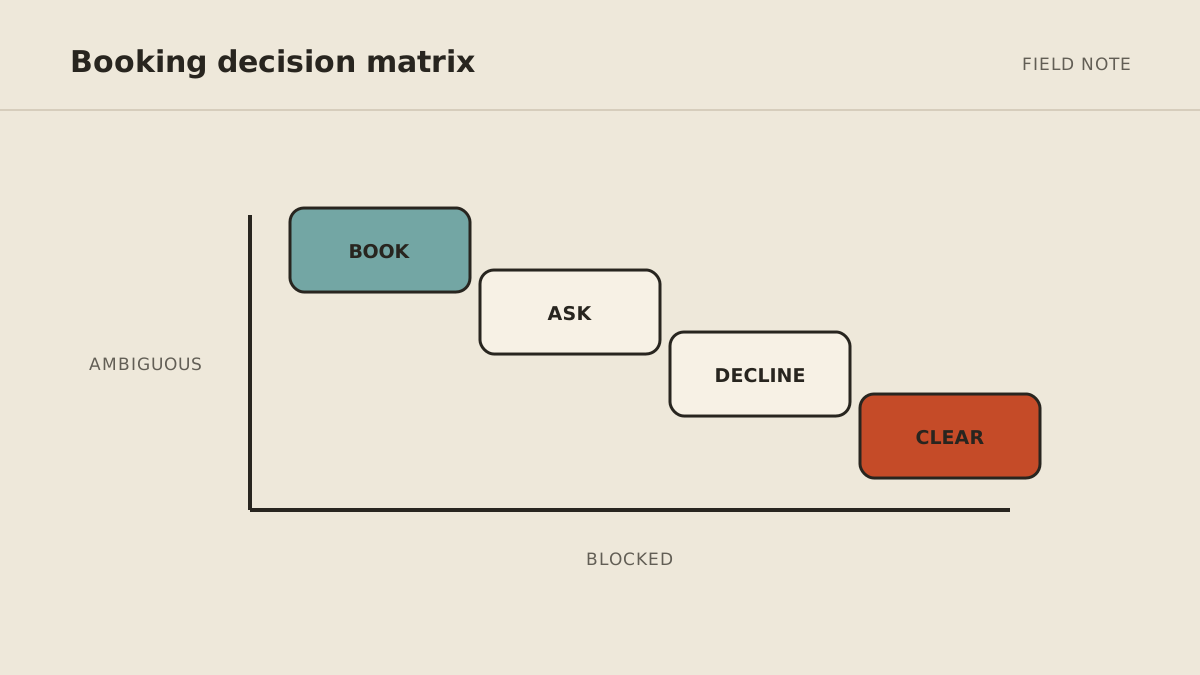
The approval rule should reflect the risk. Reserving a free class inside a narrow time window may be safe to automate. Paying a deposit, accepting a strict policy, or booking sensitive care should come back to you first.
Our act, ask, or never framework is a simple way to set those boundaries before the agent begins.
How to start using an AI booking agent
Choose one recurring booking that annoys you but is easy to review. Do not start with an expensive trip or an urgent medical appointment.
A useful first request might be:
Find a 60-minute haircut within three miles of my office next Thursday between 4 and 7 p.m. Keep the total under $80. Show me the best two options before booking.
That request gives the agent a clear finish line and tells it where to pause. After a few successful runs, you may decide that it can confirm similar appointments without asking every time.
Keep the first workflow observable. Save the selected option, final price, policy, and confirmation. If the agent cannot complete the task, it should explain where it stopped instead of quietly failing.
How MyAgnts handles booking work
MyAgnts provides a managed AI operator that can work through browser, calendar, messaging, and other approved tools. We shape it around a defined job and decide with you which steps it can take on its own.
For a booking workflow, that means setting preferences, access, spending limits, and approval points before the operator runs. It can then handle the searching and form work while returning to you for decisions that need a person. See how the managed setup works or explore the form-filling and booking use case.
Frequently asked questions
Can AI really book appointments for me?
Yes. An agent with browser or scheduling access can search available times, complete forms, and confirm many ordinary appointments. It may still need you for identity checks, one-time codes, payments, or choices outside the limits you set.
Is an AI booking agent the same as an AI receptionist?
No. An AI receptionist usually books customers into one business’s calendar. A personal booking agent represents you and can work across different providers or websites.
Is it safe to let AI make a booking?
It can be safe for low-risk tasks when access is limited and the agent has clear approval rules. Require confirmation before payments, sensitive submissions, strict cancellation policies, or any decision that would be difficult to reverse.
Can an AI booking agent make phone calls?
Some agents can use a calling tool, but the capability depends on the service and the business being contacted. Ask how calls are identified, recorded, and reviewed before using voice for a booking workflow.
If bookings keep stealing time, book a setup call. No task prep is required; we will learn how the process works, map the tools, and identify where the operator should wait for you.