Fundamentals
AI Agents vs. Chatbots
Chatbots answer questions. AI agents can use tools, preserve context, and carry work through multiple steps. Here is how to choose the right one.
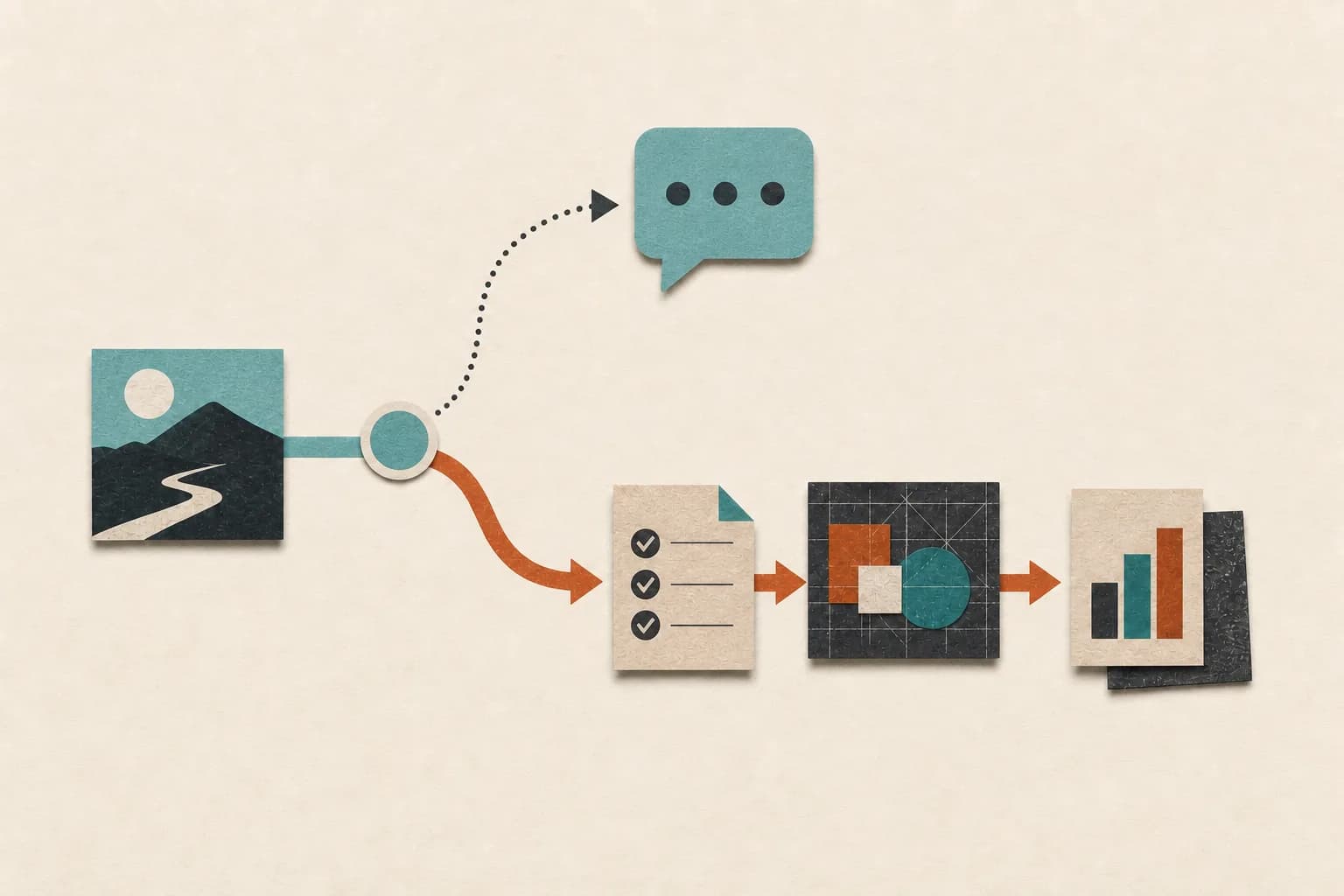
The practical difference between a chatbot and an AI agent is not how human the conversation feels. It is whether the system only responds or can also carry work forward.
A chatbot is enough when the desired result is an answer. An agent becomes useful when the desired result requires actions, tools, memory, or work that continues after the first response.
A chatbot returns language
Chatbots are strong at explaining, drafting, summarizing, and thinking with you. You provide context, ask a question, and receive text back.
That is valuable. It is also where the responsibility usually returns to you. You copy the draft into email, open the spreadsheet, check the sources, set the reminder, and come back next week to repeat the prompt.
An agent pursues an outcome
An agent can break a request into steps and call tools to complete them. Tools might let it search the web, navigate a site, edit a file, check a calendar, or schedule a future run. Hermes Agent, for example, documents a broad tool registry plus scheduled tasks and persistent memory.
Consider this request: “Before tomorrow's team meeting, tell me what is blocked.”
A chatbot can suggest an agenda template. A connected agent can gather updates from agreed sources, identify unresolved decisions, prepare the agenda, and return follow-up tasks with owners. The distinction is not smarter prose. It is completed steps.
The five differences that matter
1. Tools
Chat works inside the conversation. Agents can act through permitted tools. Every tool should have a clear purpose and access policy.
2. State
A one-off chat depends on what is in the current thread. An agent may preserve selected preferences, project facts, and workflow rules between sessions.
3. Time
Chat starts when you type. Agents can also run on a schedule or respond to an event, which makes recurring work possible.
4. Multi-step work
Chat gives you material for the next step. An agent can decide and execute the next permitted step, check the result, and continue until it reaches the finish line or needs you.
5. Control
Because agents can act, they need stronger boundaries. A reliable setup distinguishes actions that are safe to take automatically from actions that require approval.
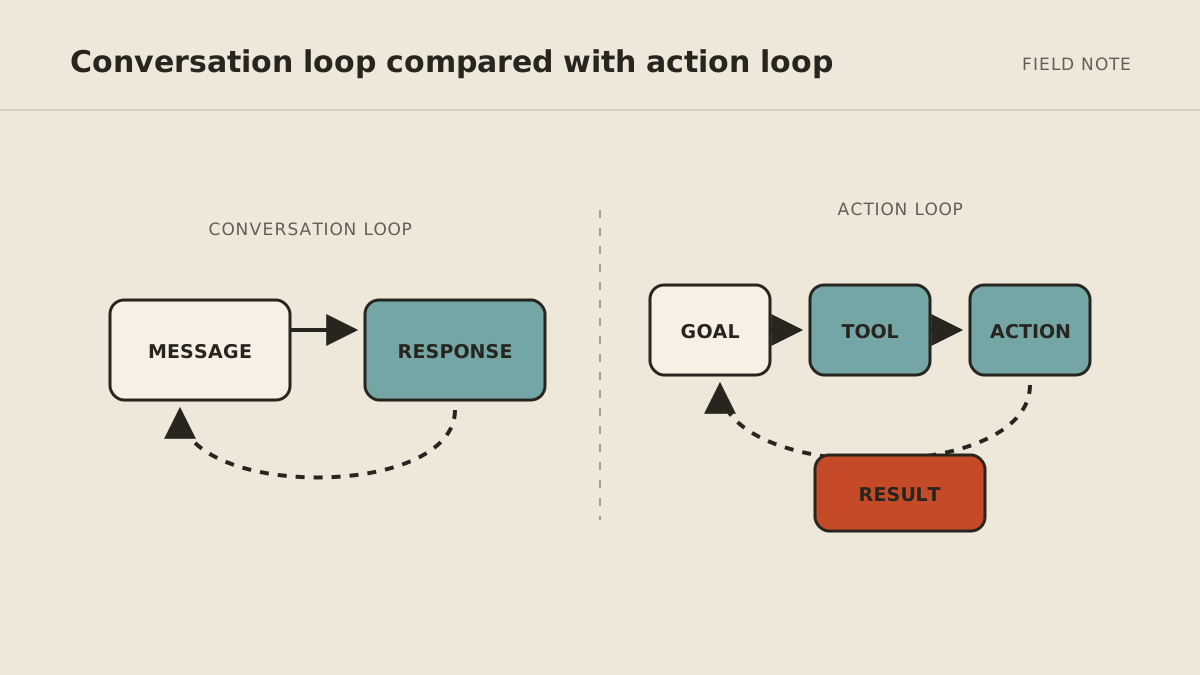
When should you use each?
Use a chatbot for brainstorming, learning, a quick draft, or a one-time answer. Use an agent when the task repeats, spans tools, benefits from retained context, or should finish without you manually carrying every intermediate step.
Often the right system includes both. You talk naturally, as you would with chat, but the agent has an operating layer behind the interface.
A quick decision test
Ask: “After the AI replies, how many steps are still mine?”
If the answer is zero or one, a chatbot may be perfect. If the answer is “now I need to open six tabs, reconcile the information, send three messages, and remember to do it again Friday,” you have found an agent-shaped job.
See how MyAgnts turns a message into finished work, including where access and approvals fit.